
At a Glance
- Visited: March 2026 · 2 weeks · First visit
- Best time to visit: March to May (cherry blossoms, mild temperatures) or September to November (autumn colours). We arrived in March, just as the blossoms were starting. It was cold but manageable and the tourist crowds had not yet got into full swing.
- How long to stay: 3-4 weeks to cover the main cities properly. We managed 2 weeks, but we felt we could’ve done with another week to fit in some more nature-based activities. The cities were tiring and not being city people, would like to have got out into the countryside more. Another week or two would’ve allowed that.
- Best for: Families who love culture, food, technology (especially toilets), nature and extraordinary city experiences that don’t exist anywhere else on earth
- Budget (family of 4): JPY 40,000 per day (USD$250) was our budget including all accommodation
- Getting around: Metro in cities (IC cards essential), Shinkansen between cities
- Food for kids: It took ours a few days but our kids got into ramen, noodles, rice dishes and plenty of convenience store food in the end
- Family friendly rating: 8/10 – extraordinary but exhausting. Budget more time and money – if you have it
Quick Picks
This post contains affiliate links – full disclosure at the end
Japan, whilst incredibly rewarding, is not the easiest country to visit with children. The metro can be exhausting. The crowds can be overwhelming. The sheer size of the cities, daunting. And the rules and obedience can drive you crazy.
And yet….
It’s culturally rich, giving a cultural injection like no other. Its spotless streets draw admiration. It’s neon lit streets deserve exploration. From throwing shuriken at the Samurai Museum, to feeding deer that bow at Nara. From the bamboo forest of Kyoto to sleeping on futons in a 300-year-old machiya. Japan gave us experiences like no other place we’ve visited. With friendly locals, great food, and a costly budget that just about kept us within our means, Japan was an absolute delight to visit with the kids.
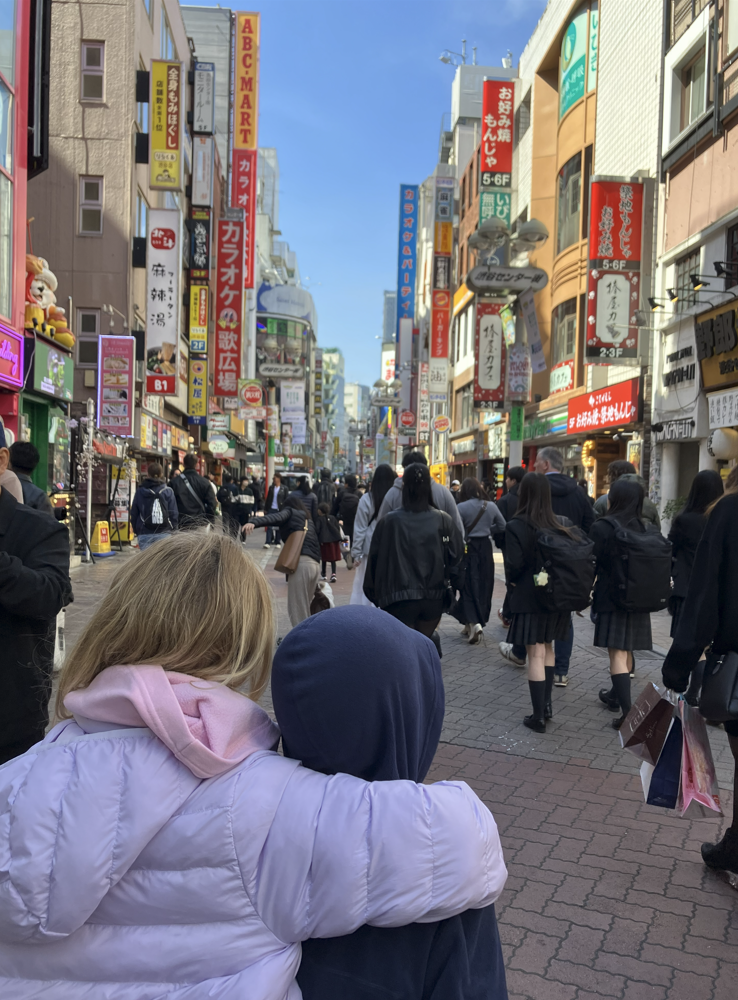
We spent two weeks across Tokyo, Osaka, and Kyoto, arriving in March from tropical Southeast Asia, underprepared for six degrees, and comprehensively unprepared for the state-of-the-art toilet situation.
Clearly there is much more to Japan than these three cities and I know solo travellers who have got off the beaten track to discover a truly stunning breath-taking environment, so we would love to hear in the comments which places other have enjoyed with kids in Japan.
This is our complete guide to Japan with kids.
In This Article:
- Why Japan with kids – is it worth it?
- When to visit Japan with kids
- Getting to Japan
- Getting around Japan with kids
- The Japan Rail Pass – do you need one?
- Where to stay in Japan with kids
- Food in Japan with kids
- The Japan toilet and bin situation – essential reading
- Our Japan itinerary with kids
- Tokyo with kids
- Osaka with kids
- Kyoto with kids
- Day trip: Nara and the bowing deer
- Costs and budget
- Tips for Japan with kids
- Is Japan worth it for families?
- Frequently asked questions
Why Japan with Kids - Is It Worth It?
Yes, totally but you need to go in with realistic expectations when travelling with kids.
Japan’s cities are busy and on first arrival, their metro systems can seem confusing. The rules – for walking, queuing, eating can occasionally feel a little controlling, especially when you’ve got kids who see rules as just…suggestions.
But the experiences Japan delivers for families are simply not available anywhere else on earth. The Samurai Museum. The bowing deer in Nara. The temples of Kyoto. The bullet train. The Pokemon Centres and other Character stores. The bamboo forest at dawn. A country that makes even a convenience store sandwich into something worth eating (check out the Strawberry sando).
Japan didn’t break us but it was, at times, close. But, in the end it felt like a destination to experience, rather than rush around ticking off tourist sights (although, there are heaps of those too).
🐘 Wondering what a 9-year-old actually thinks about Japan? Read her review in our Kids Corner – click here

When to Visit Japan with Kids
Spring (Late March to April) – Cherry Blossom Season
The most famous time to visit Japan and for good reason – the country transforms. Parks, temples, canal paths all framed by pink and white blossom. Temperatures are mild and perfect for sightseeing. The crowds are significant so book accommodation months in advance and prepare for queues at popular spots. We arrived mid-March as it was just starting to get busy. By the time we left later in March, the blossoms were almost fully out and the crowds were too.
Autumn (October to November) – Our Recommendation for Families
Apparently, this time of year has spectacular autumn foliage, comfortable temperatures (15-20 degrees), and notably more manageable crowds than spring. October and November are our top recommendation for families, based on what we’ve heard, particularly for Kyoto and Osaka where the autumn colours are mean to be extraordinarily beautiful.
Summer (June to August) – Avoid with Young Kids
Summer is meant to be hot, humid and intensely crowded, from my friend who lives in Tokyo. Tokyo in July regularly hits 35 degrees with high humidity. Combined with the distances involved in getting between attractions on the metro, summer family sightseeing we would imagine could be hard work. The school holidays bring domestic crowds on top of international tourists. If you must visit in summer, plan for early morning starts and air-conditioned retreats in the afternoon.
Winter (December to February) – Coldest
Cold. But winter has real advantages: fewer crowds, better availability, and the same extraordinary Japan with lower prices on accommodation. Go prepared with proper cold weather clothing.
Getting to Japan
By Air
Tokyo has two international airports – Narita (60-90 minutes from the city) and Haneda (30-40 minutes). Most long-haul international flights use Narita. Osaka’s Kansai International Airport is the alternative entry point for the Kansai region, which is better if you’re planning to start in Osaka or Kyoto rather than Tokyo.
From the UK, expect 12-13 hours direct (Japan Airlines and British Airways both fly direct to Tokyo). From Australia, 9-10 hours. From New Zealand, around 12 hours.
Search and book flight to Japan here
Airport to City
From Narita, the Narita Express (N’EX) is the most comfortable option taking about 60 minutes to Shinjuku or Tokyo Station. The Limousine Bus is slower but drops you at major hotels. From Haneda, the Tokyo Monorail or Keikyu train are both quick and easy.
We arrived late at night after a 6-hour flight with tired and hungry kids so we took no chances and took a taxi.
Getting Around Japan with Kids
IC Cards – Get These First
The single most important thing you can do before attempting to use any form of public transport in Japan: buy a Suica or Pasmo IC card at the airport. Load it with yen. Tap in and tap out everywhere. Without one, you’ll spend an enormous amount of time queuing for single-journey tickets at machines that are, by Tokyo standards, only mildly confusing.
IC cards work on every metro line in every Japanese city, most buses, and very handily, in convenience stores, vending machines and even some restaurants.
The Metro – Comprehensive but Complex
Tokyo’s metro is the most extensive urban rail network in the world. It is also, for first-timers, genuinely bewildering. Multiple competing lines, multiple operators, platforms buried several stories underground, signs pointing in six directions simultaneously.
By the time we reached any destination, we were already exhausted and slightly defeated, knowing we had to do the whole thing in reverse. The metro improved significantly over five days in Tokyo as we got our bearings. Day one was hard. But we soon got the hang of it. It was just the crowds and lengths of journeys that was challenging in the end.
The Shinkansen: Bullet Train
The bullet train between Japanese cities is one of the great travel experiences – smooth, punctual, fast and with impeccable onboard service. We took the Nozomi from Tokyo to Osaka (2 hours 22 minutes for 515km) and it was a highlight of the trip. The kids were genuinely impressed.
Buy tickets in advance. Although from the research we done, walk-up process are the same as prices are fixed, but you’re not guaranteed a seat if you haven’t booked. The reserved seating carriages have extra legroom and luggage space, and are worth the slightly higher cost for families.
Book your Japan train tickets here

The Japan Rail Pass - Do You Need One?
The JR Pass gives unlimited travel on most JR trains including the Shinkansen for a set period (7, 14 or 21 days). It sounds brilliant and for some itineraries it is excellent value.
We didn’t buy one – and for our itinerary it was the right call. We only took one Shinkansen journey (Tokyo to Osaka) and did the rest of our travel on local trains and metros with IC cards. One Shinkansen journey doesn’t justify the pass cost.
We done a bit of research before we decided we didn’t need one, but we recommend you do your own research to come to your own conclusion but here’s what we found:
When the JR Pass IS worth it:
- If you’re doing say: Tokyo – Kyoto – Hiroshima – Tokyo or similar multi-city itinerary with multiple Shinkansen journeys
- If you’re travelling to Hokkaido or other regions requiring longer JR journeys
- If you’re spending 2+ weeks and covering a lot of distance between cities
When it probably ISN’T worth it:
- If you’re based mainly in Tokyo or Osaka/Kyoto and doing day trips
- If you only take one or two Shinkansen journeys, like we did, if going one way Osaka to Tokyo or Tokyo to Osaka
- If you’re spending most time in cities where the metro (not JR) is the primary transport
Where to Stay in Japan with Kids
Tokyo
Shinjuku or Shibuya for central access and the best transport connections but you’ll pay a lot more so depends on your budget. Asakusa for a more traditional atmosphere and slightly lower prices. A quieter suburb, like near Kinshicho station – as we discovered, staying slightly outside the centre gives you a different and sometimes surprisingly peaceful Tokyo experience.
Osaka
Namba would be good for families – central, walkable to Dotonbori and the best food, well connected for day trips to Nara and Kyoto but will cost more. We stayed at an incredibly clean, spacious 3-bedroom apartment around Midoribashi metro station. It was residential area but just a 25-minute metro ride to the centre.
Kyoto
The Gion district – Kyoto’s traditional geisha quarter is the best base for exploring the historical heart of the city on foot. Accommodation ranges from budget guesthouses to luxury ryokan. We stayed a in a traditional machiya, a 10-minute walk away from Gion, right next to Higashiyama station, which was perfect.
You can search and book accommodation across Japan here
📍 Where We Stayed in Kyoto: Azzurro Elefante
A traditional Michaya – old traditional style Japanese house, 10-minute walk from Gion, located down a very quiet, narrow, old street. Close to Higashiyama station. Sleeping is across two rooms on futons and the living room is on Zaisu. It has a modern kitchen, bathroom and includes heating and TV. Incredible value for money.

Food in Japan with Kids
Our kids had a challenging relationship with Japanese food when we first arrived for a few days, but it clicked and they found their groove.
What Works for Kids
- Ramen – this was a little hit and miss with our kids, but they did try it a few times
- Sushi – we surprisingly didn’t eat much sushi, but the kids always enjoy it
- Takoyaki (Osaka) – octopus balls. Kids weren’t massively into them but was fun getting them to try
- Rice and Noodle dishes – we found any rice or noodle dish generally went down well with the kids
- Convenience store food – 7-Eleven, FamilyMart and Lawson in Japan are genuinely excellent and absolutely everywhere. Sandwiches, hot food, sushi, they have it all. When you’re on the go a lot, as we were, these ended up being a very common stop for snacks and even light lunches. Just be aware, they don’t even have any bins so take a bag to put your rubbish in
- Rainbow cheese toasties on Takeshita Street, Harajuku – not traditional Japanese food but absolutely outrageous fun for the kids

The Japan Toilet & Bin Situation - Essential Reading
Japan has taken the humble toilet and elevated it to an art form that requires the user to have a degree in toiletry to operate:
- More buttons than a spaceship – heated seat, multiple bidet options, volume-adjustable noise masking
- The heated seat alone is worth the airfare – when travelling in the colder months. Take a book, it’s comfy
- Noise masking button plays running water sounds – volume adjustable, depending on “requirements”
- Umbrella hooks at urinals. Did someone ask for these? Japan provided it anyway
- Baby seats inside cubicles – facing you as you do your business – equal parts genius and unsettling – but maybe they learn potty training quicker
And yet, despite all this toilet sophistication, there are no bins anywhere in Japan. Not in 7-Eleven. Not on the street. Not in train stations. And still the streets are spotless, like someone is constantly secreting licking them clean. We spent our entire visit carrying fourteen snack wrappers at all times because of our kids constant hunger. I have to admire their dedication to keeping the place clean.
Our Japan Itinerary with Kids
Tokyo (5 days)
Arrived from Kuala Lumpur to six degrees of cold air and immediate culture shock after months in the tropics. Five days of metro mastery (gradual), Samurai Museum (immediate triumph), Shibuya crossing, Meiju Jingu temple, Senso-ji temple, Takeshita Street rainbow cheese toasties, the SkyTree, the Pokemon Store, the Lego Store and Character Street. Five days was the right amount – we could’ve stretched another 2 days maybe.
Read our full guide: Tokyo with Kids – Honest Family Guide – here
Osaka (7 days)
Bullet train from Tokyo – blinked and we missed it as we arrived in Osaka in less than 2 hours 30 minutes – bang on time. Osaka was great fun: busy, loud, great food options, great days trips, and slightly more manageable than Tokyo. Dotonbori neon, Osaka Castle, the UFO Catcher (spent everything, won nothing), a day at Minoo Waterfall, that saved our sanity, and Nara Park deer – where the kids fed the bowing deer. Yes, the deer bow.
Read our full guide: Osaka with Kids – Honest Family Guide – here
Kyoto (2 days)
Just a short 15-minute bullet train from Osaka, or if you mess up like we did and get side-tracked buying snacks for the kids, whilst trying to take the cheaper local train, it took us over two hours. We stayed 2 nights, staying in a traditional machiya which was a great experience. Sights: Fushimi Inari, Arashiyama bamboo forest, Gion, Yaska Shrine and Pergola, and Ninenzaka and Sanennzka streets. Kyoto was a little tougher going on the kids, as it is more for adults with many temples and shrines, and with attractions very spread out, it was a challenge to keep them going. We trained back to Osaka airport to fly out. We could’ve seen more and done with a couple more days but its was definitely tough with the kids so just happy with what we did see.
Read our full guide: Kyoto with Kids – Honest Family Guide – here
Day Trip: Nara
From Osaka by train – an hour, and one of the best tourist things to do of the three centres we visited. Over 1,000 deer roaming freely among the temples. Buy some special deer biscuits to feed them and let the kids run wild. The deer bow. Yes, they bow. Todai-ji temple and its giant bronze Buddha is the cultural anchor. Totally worth the day out.
Read more: Nara day trip from Osaka – read our travel blog here


Key Japan Destinations with Kids
Tokyo
The world’s largest city: extraordinary, exhausting, unmissable. Five days minimum. The Samurai Museum, Shibuya crossing, SkyTree and the Pokemon Centre are the family highlights. The metro is the biggest challenge. See our full Tokyo with Kids guide.
Osaka
Our favourite Japanese city for families – more relaxed than Tokyo, better food options, excellent day trips. Dotonbori, Osaka Castle, and the day trips to Minoo and to Nara. Seven days is ideal. See our full Osaka with Kids guide.
Kyoto
Japan’s ancient capital: temples, bamboo forests, wooden lanes and a pace that rewards slowing down. Two nights minimum. Three to four days if your kids can handle it. Fushimi Inari and Arashiyama are unmissable. See our full Kyoto with Kids guide.
Hiroshima and Miyajima
We didn’t visit on this trip but Hiroshima’s Peace Memorial and the floating torii gate at Miyajima Island are both on our list for a return trip – we heard good things from other travellers but might be for slightly older kids.
Hokkaido
Japan’s northern island – famous for skiing in winter and lavender fields in summer. We haven’t visited but it’s high on the list as a friend from Tokyo highly recommended it.

Costs and Budget for Japan with Kids
- Accommodation: Tokyo: JPY 12,000-35,000 (spacious 2-bed apartment), Osaka: JPY 9,100 (spacious 3-bed apartment), Kyoto: JPY 11,500 (spacious traditional machiya)
- Metro journey: JPY 180-500 per person per journey
- Shinkansen Tokyo to Osaka (family of four): JPY 43,000 (USD$265) reserved seat
- Convenience store meal per person: JPY 500-800 (USD$3-5)
- Meal at ramen or local restaurant (family of 4): 3,000-4,000 Yen (USD$20-30) – hard to find but we managed to sniff out some cheaper places
- SkyTree: 10,700 Yen for family of four (USD$65)
- Samurai Museum (family of 4): approximately 11,000 Yen (USD$65)
- Nara entrance: free (deer crackers extra)
- Osaka Castle: JPY 600 adult, under 15 free
- Overall daily budget including accommodation: JPY 40,000 per day (USD$250) was our budget including all accommodation, transport and food, living on a budget but managing to do these sights above. On a higher budget you would probably see more and eat a little more comfortably.
Tips for Japan with Kids
- Buy IC cards (Suica or Pasmo) at the airport or at your first metro stop
- Don’t over-schedule – it takes time to get to places, its busy and kids get hungry and tired.
- Book attractions in advance. SkyTree sold out quicky. If you like the character cafes, like Pokemon, Kirby etc -they book up MONTHS in advance.
- Convenience stores (7-Eleven, FamilyMart, Lawson) are genuinely excellent for meals and are great for food on the go
- Everyone follows pedestrian crossing rules even with no cars coming – so make sure you still stop at the red light, and learn to twiddle your thumbs
- Nobody eats or drinks while walking – difficult with kids – and good luck trying to find a bench. We are on so many random steps.
- Go to Fushimi Inari and Arashiyama bamboo forest very early or very late to avoid crowds
- If you leave any baggage in a train station locker, take a photo of your station locker location. We made this mistake and without the help of a wonderful station worker, we would probably still be there today looking for it. The stations are massive, with people everywhere, different levels, malls, entries, exits – we really messed up and nearly missed our flight
- Pack proper cold weather clothing if visiting October to March

🐘 Wondering what a 9-year-old actually thinks about Japan? Read her review in our Kids Corner – click here
Is Japan Worth It for Families?
Yes – emphatically, unreservedly, with one condition: go in knowing it’s hard work and budget accordingly. For us, Japan was an ‘experience’ rather than ticking off sights. Yes, we did chase a number of sights, but it was clear we couldn’t do it all, instead resulting to just enjoying the culture and the experience as it was so different to anywhere else, we had been.
Japan can be expensive. Mostly accommodation. Food, if you shop around can be reasonably priced but coming from Southeast Asia, we found it a huge jump up, but by Western standards, its similar but can be cheaper.
For the sights that we did get to see, Japan delivered – The Samurai Museum. the bowing deer, the bamboo forest, the bullet train, the SkyTree, Minoo, sleeping on tatami in a machiya. Many happy memories created.
Japan was just like having kids – challenging at times but incredibly rewarding. The more you put into it, the more you get out of it. But just have the right expectations. We left wanting to go back one day. Probably not in a hurry and next we would absolutely seek out to get more rural, to the countryside and to village life. For now, the city life memories will live on.
Ready to Book?
- ✈️ Flights to Tokyo or Osaka: Here
- 🚄 Shinkansen Tokyo to Osaka: Here
- 🏨 Family accommodation in Tokyo: Here
- We stayed here
- 🏨 Family accommodation in Osaka: Here
- 🏨 Machiya and traditional accommodation in Kyoto: Here
- Our awesome machiya here
- 🥷 Samurai Museum Tokyo tickets: Here
- 🎡 SkyTree tickets: Here
- 🎟️Book Japan-wide tours: Here
- 📱Buy your Japanese E-SIM here
- 🛡️Buy Travel Insurance here
This post contains affiliate links. If you book through these links we may earn a small commission at no extra cost to you — which helps keep Roaming Wild running. Thank you!
Our Japan Guides
Frequently Asked Questions
Is Japan good for families with young children?
Yes – with the right preparation. Children aged 7 and above tend to get the most from Japan although it was still tough at times with a 7 and 9 year old. Younger children may find the metro distances and cultural expectations challenging. The attractions are excellent, the food works well for most kids after a few days, and Japan is extremely safe. The main challenges are cost, the crowds and the distances needed to travel in the cities.
How many days do you need in Japan with kids?
Three to four weeks is probably ideal for covering Tokyo, Osaka, Kyoto and some time stopping rurally somewhere (Like the Mount Fuji area). Two weeks is possible but leaves you feeling a little bit rushed. We spent two weeks and whilst we had a good crack at it, we know we left a lot on the table, for next time.
Is Japan expensive for families?
Yes – Japan is one of Asia’s more expensive destinations, particularly coming from Southeast Asia. Budget USD$250 per day minimum if travelling on a tight budget, for a family of four including accommodation. Eating at convenience stores and cheaper ramen restaurants rather than tourist-oriented places saves money.
Do you need a Japan Rail Pass?
It depends entirely on your itinerary. We didn’t buy one – we only took one Shinkansen journey so wasn’t needed. If you’re doing multiple city-hopping journeys by Shinkansen, the pass may save money. Do some research and calculate your planned journeys against the pass cost before deciding.
What is the best city in Japan for families?
We can only comment on those we visited – Tokyo, Osaka and Kyoto. Osaka was more relaxed than Tokyo, better food, excellent day trips to Nara, Minoo and Kyoto, and so would probably be our preferred option. That’s not to dismiss Tokyo though – it is an extraordinary place and absolutely worth visiting, but exhausting. Kyoto is culturally richer but quieter and the sights are more adult orientated, unless your kids love temples.
When is cherry blossom season in Japan?
Late March to early April, varying by year and location. Tokyo and Osaka are typically late March, Kyoto slightly later. Book accommodation months in advance if you’re planning to visit during this period as it is peak tourist season and fills up fast. We left just before the blossoms were in full bloom and the crowds were really starting to ramp up.
Is Japanese food OK for kids?
In our experience yes but only after a few days of adjustment. Ramen, sushi, rice dishes and noodle dishes worked but also convenience store food was a life saver when on the move. The sealed wet wipe with every meal is a touch of genius to clean those mucky hands before and after a meal.
You Might Also Like
Family Travel Guide - Tokyo with Kids: The Honest Family Guide to the World’s Biggest City

Family Travel Guide - Osaka with Kids: The Honest Family Guide to Japan’s Food Capital

Travel Blog: Tokyo with kids blog: Culture shock, crowds & temperature shock

Travel Blog: Travel to Osaka and Kyoto: Exploring Claw Machines, Deer & Waterfalls

Family Travel Guide - Kyoto with Kids: The Honest Family Guide to Japan’s Ancient Capital

Family Travel Guide - Seoul with Kids: The Honest Family Guide to South Korea’s Mega-City