
Crossing the Nullabor Plain - the longest straight section of road in the world
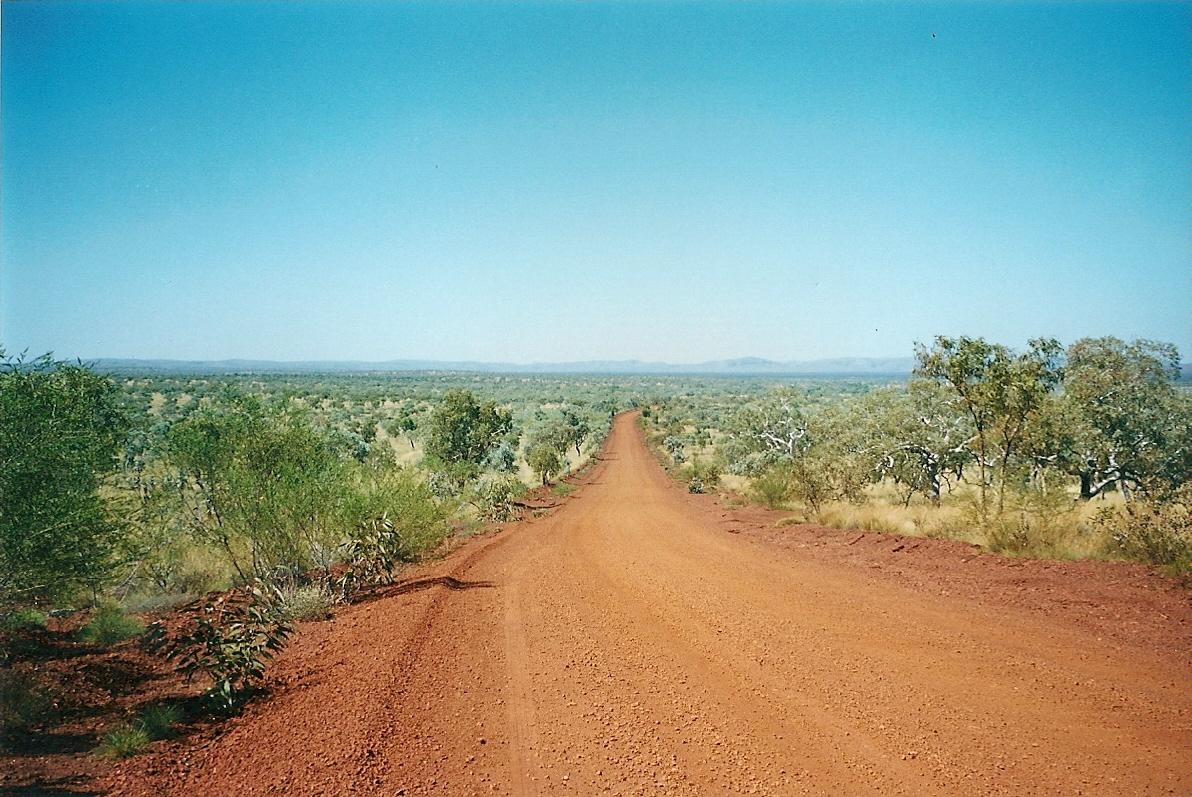
The 1,600km stretch of road from Adelaide to Perth, across the Nullarbor Plain, is said to contain the world’s longest straight road – 140km without a single bend.
Hour after hour of Aussie desert is the sole view on the 35‑hour bus journey across this barren highway, save for the odd roadhouse selling a Mrs Mac’s pie.
It’s the kind of journey where you start questioning your life choices somewhere around hour six.

Kalgoorlie: Gold, Dust and Breezers in Pants
Kalgoorlie, eight hours east of Perth, is the first major town on the route.
A gold‑mining town dating back to the 1800s, it looks like a western movie set – saloon bars, brothels and red dusty streets.
Workers flock here to get rich. Mining pays good money, but you need to be comfortable living in the back end of the outback in a heavily male‑dominated environment, in sweltering heat, with booze as your only comfort.
I visited a gold mine and went down a tiny lift shaft 120 feet below ground. Pretty awesome, if somewhat claustrophobic.
I even went panning for gold and scored a few tiny flakes worth absolutely bugger all.
In the evening I met a bunch from my hostel and hit the bars, packed with mine workers blowing their wages.
Scantily clad barmaids, called Skimpies, served drinks – a tradition still going strong from the 1800s.
I was out with Shaun, an enormous gentle Samoan guy who was a monster drinker, even though his choice of drink questioned his otherwise macho appearance. Each round he ordered four Bacardi Breezers, tucked two into his pants, sculled the first two, then retrieved the others like pistols from a holster. He was at the bar every few minutes and never seemed drunk.

Perth: The Surprise Favourite
Perth turned out to be my favourite city in Australia – laid‑back, sunny, great nightlife, amazing beaches and loads to do nearby.
I spent four weeks with a great bunch of fellow travellers at the fab Ozi Inn hostel.
After a week‑long tour to the stunning southwest corner of the country, taking in Margaret River, Dunsborough, and Danmark, I was back in Perth looking for a plan of what to do next.
That plan soon fell into place when a friend of a friend was looking for extra person to take the last car on their road trip to Darwin – 4,000km away.
The back seat of a beaten‑up Ford Falcon was to be my bed for the next five weeks while the other, newly found random strangers, sensibly took tents.
With just a tiny, methylated-spirits stove, that took an age to cook anything, between five of us, our diet was tins of beans and cheese sandwiches, washed down with dirt‑cheap cask wine. Backpacker gourmet.

The Batavia Mutiny: Australia’s Wildest Shipwreck Story
Off the coast of Geraldton lie the 122 coral islands of the Abrolhos – home to one of Australia’s most extraordinary maritime stories: the shipwreck and mutiny of the Dutch ship Batavia in 1629.
I took a tiny four‑seater plane out to the islands to learn the tale.
The Batavia set sail from South Africa to modern‑day Jakarta with treasure on board. Two crew members, Jacobsz and Cornelisz, plotted to steal the ship and start a new life. But the ship struck the reefs of the Abrolhos and wrecked.
Most of the 300-crew survived by swimming to an island – now the Abrolhos islands.
Jacobsz and senior crew sailed 33 days by the spare-longboat to Batavia (Jakarta) for help, leaving Cornelisz in charge – a chance for him to carry out his murderous plan.
He relocated soldiers led by a guy named Hayes to a nearby island under the pretence of finding water, assuming there was none.
Back on his island, Cornelisz rounded up supporters and brutally murdered most of the crew, including women and children.
But Hayes found water and food. Survivors escaped to his island and warned him of Cornelisz plan.
Cornelisz attempted to attack Hayes, but Hayes had built a crude stone fortress and fought him off.
When the rescue ship arrived, both sides raced to tell their story. Hayes won. Cornelisz and his mutineers were tried on the spot. Many were executed.
Two were released onto mainland Australia – 150 years before Cook even arrived. Early explorers later found Aboriginal groups with lighter skin and blue eyes…
Flying over Hayes’ stone fort that still stands today – European Australian’s first man‑made structure – and seeing centuries‑old steel wreckage on the reef, was surreal. Imagining hundreds of men, women and children being murdered in such a remote, unknown part of the world was chilling.

Monkey Mia: The Friendly Dolphins
For 40 years, the friendly dolphins of Monkey Mia have been coming ashore to mingle with humans. Fishermen started feeding them in the 60s, and now tourists make the mammoth journey 800km north of Perth to see them.
We avoided the early‑morning rush and waited for the dolphins to return late morning.
Sure enough, they rocked up and playfully swam around our ankles for several minutes expecting fish.
We had none, so they soon left.
But it was still an experience to never forget.

Ningaloo Reef: Kangaroos, Turquoise Bays and One Terrifying Tuna
Cape Range National Park and the Ningaloo Reef, on the far northwest tip of Australia, were the highlight of the entire trip. A deserted wild peninsula with turquoise bays and coral reef just 100 metres from shore.
While the others did a dive course, I headed out alone with my packed lunch and snorkel.
Kangaroos rule this part of the country. If they’re not hanging out in the shade, they’re lying dead on the road. At night they roam campsites. Some reach over six feet tall with arms like Arnold Schwarzenegger.
But they’re tame – they often came up to our tents and allowed us to stroke them.
In the national park, they were everywhere.
I even got to share my cheese sandwich one. Remote Australia, no one around, having lunch with a kangaroo. This is what travelling is all about.
Sandy Bay was picture‑perfect – golden sand, crystal water, no one else around.
I stuck on my snorkel and swam out to the reef. Less colourful than the Great Barrier, but full of life. A gentle current floated me along.
Then, out of the corner of my eye, I saw a huge eye staring back at me. Attached to the biggest fish I’d ever seen – as big as me. Massive, shiny, mouth ajar, as if to say, “Who are you in my waters?”
My heart skipped a beat. A fart escaped. I lifted my head, pretended I hadn’t seen it, and swam like mad to shore. I didn’t get back in.
Later that night, locals told me it was probably a tuna.
“Tuna!? They come in tiny tins mushed up – how can they be so big!?”
I had no idea tuna how big tune were. Terrifying. And embarrassing.

The Final Stretch to Darwin
The rest of the journey to Darwin was quintessential Australia: dusty red roads, kangaroos galore, 40‑degree heat, strange rock formations, dead cows in the road, giant insects, crocodiles, camels, bushfires by the side of the road, large Aboriginal communities, redback spiders, stunning remote beaches and plenty of red‑neck towns with classic Aussie humour.
I fell in love with this whole part of the country.
Some stretches had just one roadhouse every few hundred kilometres. Nothing but bush.
Broome was the only significant town – population just 10,000, yet it felt like a capital city.
Cable Beach was its main attraction, with horse rides and sunsets to die for.
Three of us got struck down with food poisoning from pizza, knocking us out for two days.
Up all night throwing up from the pit of our stomachs. It was like tag‑team vomiting. Very grim.
We done an incredible flight over the Bungle Bungles – a bizarre rock formation in the middle of nowhere covering 45,000 hectares. 350-million-year-old rocks, only discovered in 1982 (by European Australians – clearly the indigenous peoples wanted to keep it a secret) – just shows how massive Australia, if something this large wasn’t even discovered.
After 8,000km on the clock, we crossed into the Northern Territory and reached Darwin.

A True Classic Road Trip
The journey had been epic – one of the best in my entire travel career.
Wild, remote, true Australia. Untouched by tourism.
Only die‑hard travellers make it this far. A harsh environment, but with scenery, wildlife and vistas that reward you tenfold.
It still sits top of my list of places to revisit in the world.

You Might Also Like
Read our other content on Australia

Read more of our travel blogs around the world

Read more of our travel guides from around the world


