Arriving in Darwin after a mamouth journey
After an epic 8,000km journey up Australia’s stunning, remote west coast from Perth, we rolled into Darwin – the country’s Wild West seasonal fun‑time city, perched up in the unpopulated Northern Territory.
Arriving at the end of the wet season meant the humidity still lingered, but the skies were mostly clear, and the mercury sat comfortably in the late 30s.
Darwin’s 120,000 inhabitants spend several months each year under huge deluges of rain and monstrous electrical storms.
But once the skies clear, the dry season kicks in and the city swells with workers and tourists alike.
Darwin: Markets, Crocs and Jellyfish That Want You Dead
Mindil Beach is Darwin’s pride and joy – golden sand, clear waters, and a brilliant nightly market selling cooked foods, Aboriginal art and hippy jewellery.
The sunsets are outrageous.
In the wet season, though, the sea is strictly off‑limits. Deadly box jellyfish and crocodiles lurk in the waters, ready to scare any unsuspecting humans.
Nets are put out in the dry season to keep the crocs away, but the odd one still sneaks through, making news headlines as bathers sprint for their lives.
For backpackers, Darwin is a fun place to hang out – probably why I stayed four weeks.
There’s free food most nights at various backpacker themed nights and the beer is cheap.
That’s all you really need in your early 20s.
Heading South: The Long Road to the Red Centre
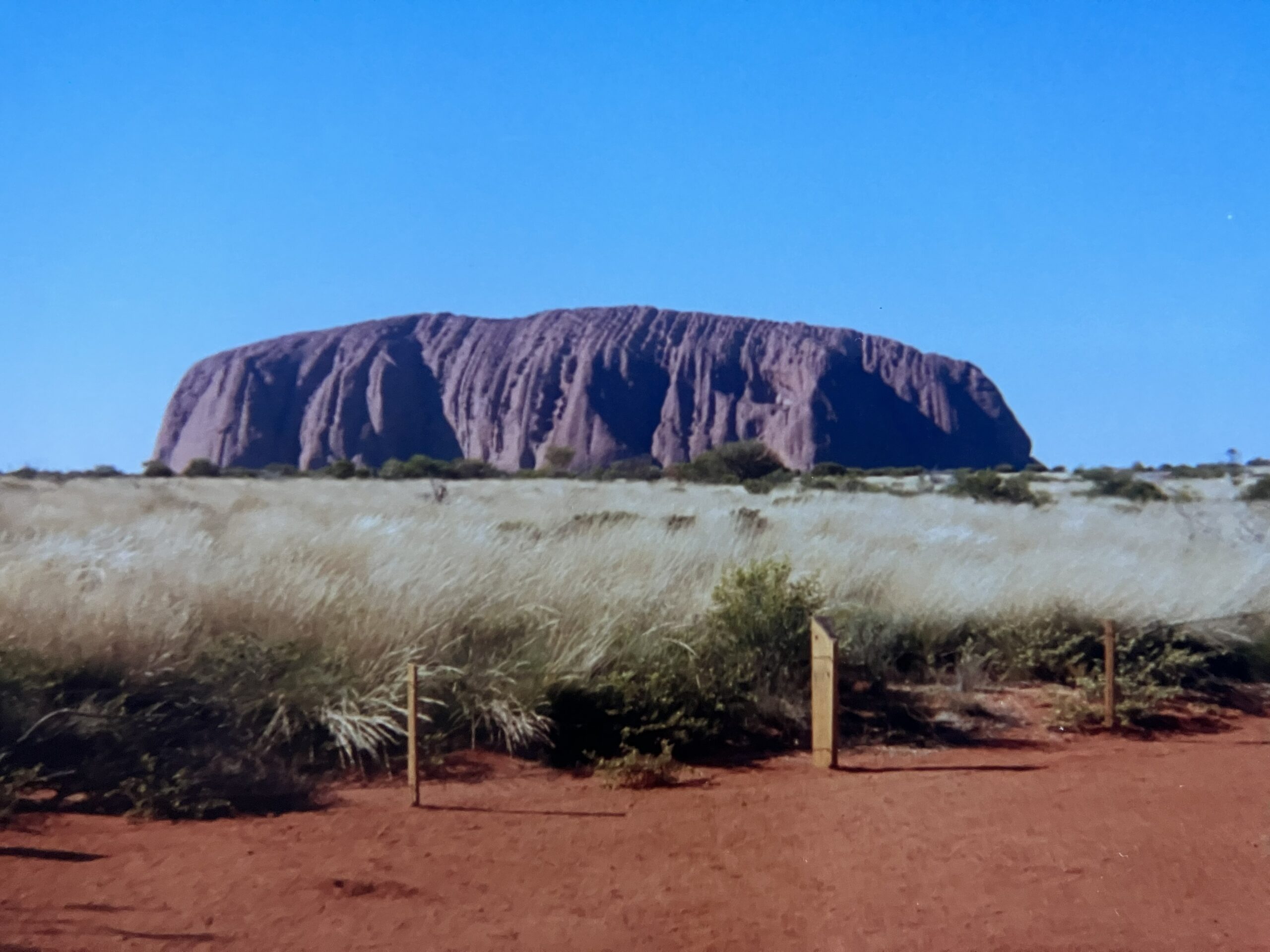
Between beach days and boozy nights, I joined a tour bus heading down to Australia’s Red Centre – Alice Springs and Ayers Rock, better known by its Aboriginal name, Uluru.
It’s yet another mammoth drive, but our guide was a machine, covering the 1,600km journey while still stopping at sights along the way.
One stop was Daly Waters, a dusty backwater hamlet of 15 permanent residents… and one very large pub.
We slept on the “school” floor – the school being an extension of the pub where the hamlet’s three children study via radio school, given the nearest teacher is several hundred kilometres away.
Australia does remote like nowhere else.
Alice Springs isn’t much to shout about, but it’s the largest place for thousands of miles and the gateway to Uluru, four hours away.
Uluru: Stars, Swags and Sunrise Magic
We arrived at Uluru late evening and slept under the stars in swags – basically sleeping bags attached to mattresses that roll out. Being in the middle of the desert, the night was freezing, but the swag did its job.
The stars were spectacular. I’ve never seen so many shooting stars – one flying past every few minutes
I lost hours staring at the beauty of the darkness and the trillions of stars overhead.
Up at 5am in the freezing cold, we headed off on the 9km circuit around Uluru.
As the sun rose, the rock shifted through shades of red and orange in spectacular fashion.
Once the sun was high, it became blisteringly hot and hard work lugging our warm jackets around.
After two hours, we’d completed the circuit, passing ancient Aboriginal artwork and caves.
Eventually we were back in Alice Springs, and I flew out back to Darwin.
Kakadu: Crocs at Arm’s Length
Back in Darwin, I visited Kakadu National Park, travelling by tiny boat through croc‑infested waters with crocodiles just a few feet from our hands. It’s the kind of place where you realise humans are not the apex predator. It’s a stunning wetland of waterways and stunning rock formations. Sadly, my budget meant I could only do a short trip – but the 3-5 days trips are meant to be epic.
Farewell to Oz
And then it was time to leave Australia after an epic five‑month backpacking trip.
I’d done a complete loop of the country and popped down the middle to the centre.
Australia is a fabulous country – one of the harshest environments on the planet but populated with some of the friendliest people on Earth.
Its Aboriginal culture is the oldest surviving culture in the world, yet has been neglected and suppressed, allowing a true Indigenous heritage to be destroyed and almost forgotten.
For me, after eight months on the road in English‑speaking countries, it was time for new adventures – and new culture shocks – in South East Asia.