
Drinking Caipirinha in Rio de Janeiro
The Portuguese first stumbled across Brazil in 1502. They landed at what they thought was a river, noticed it was January, and proudly named it Rio de Janeiro — the River of January.
Only one problem: It wasn’t a river. It was a bay.
So, Rio is, quite literally, a geographical typo.
The Portuguese quickly discovered gold and silver, shipped it all back to Europe, and — with the forced labour of three million slaves — made Portugal very rich indeed.
When Prince Regent João VI fled Napoleon in 1807, he moved his entire court to Rio, bringing fifteen thousand people with him. The city boomed. Immigrants arrived from all over the world, and after slavery was abolished in 1888, Rio expanded rapidly as favelas (Brazil’s version of a shanty town) grew and communities settled.
Today, Rio is home to over six million people, with around 25% living in favelas. Cariocas (locals) come from every background imaginable — stereotyping them is impossible.
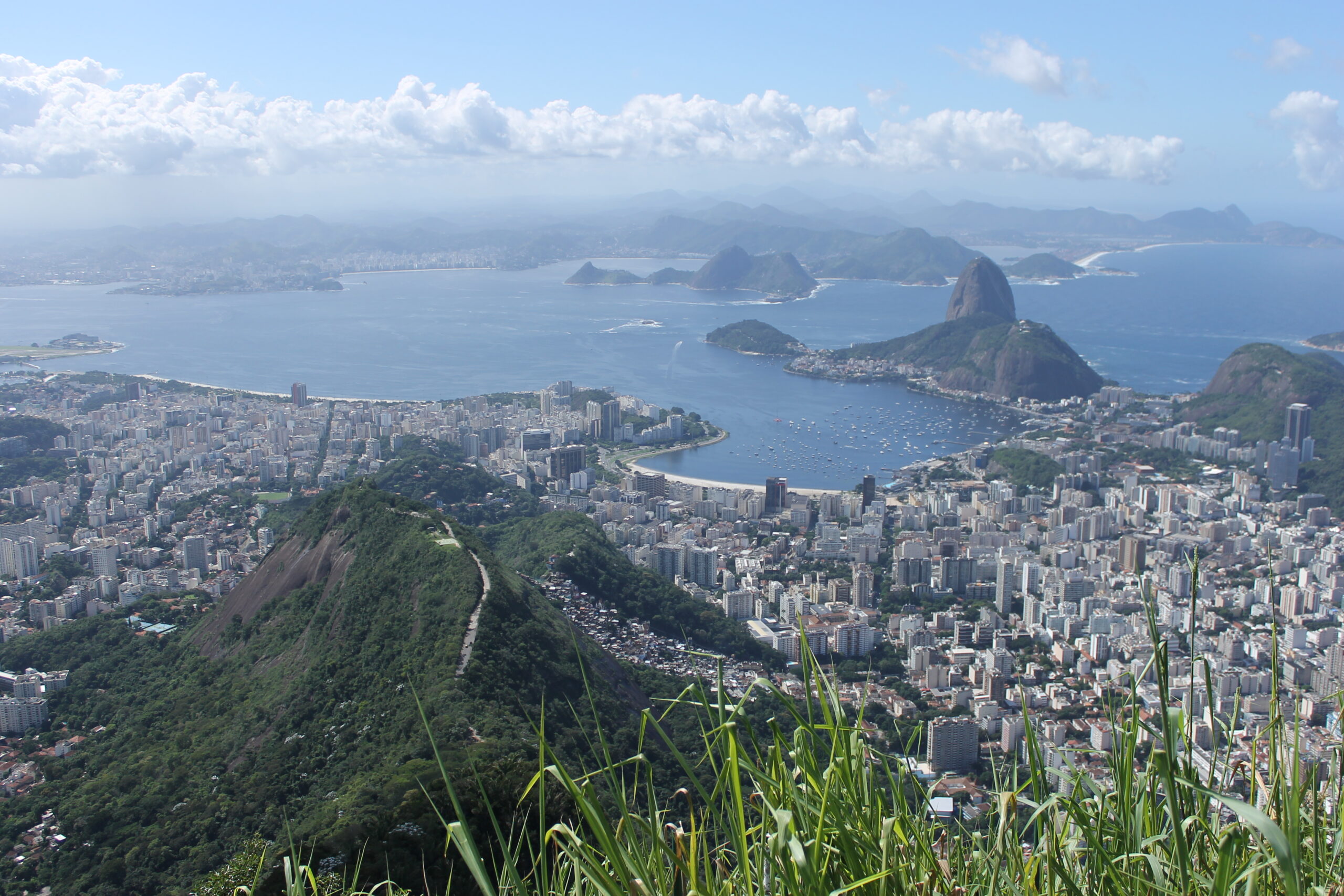
It’s also one of the few cities on Earth where you get mountains, rainforest, beaches, and a lake all in one place. Add the Football World Cup (just weeks away at the time) and the upcoming 2016 Olympics, and the city felt like it was being rebuilt at a rapid pace.

Beach Life: A Serious Business
We stayed in Ipanema, an affluent and safe beachfront neighbourhood. On a sunny day (we only had a handful), the beach is a full‑scale carnival: sun worshippers, surfers, futevôlei players, footballers, vendors selling everything from coconuts to jewellery, and people working out at the beach gyms, showing off their pumped muscles.
This is not casual beach culture. This is religion.
When we first arrived, it felt like one of those moments where an out‑of‑towner walks into a bar and the music stops.
Our first mistake: we weren’t wearing Havaianas. Apparently entering a Brazilian beach in sandals is a crime.
Second mistake: I was wearing normal swim-shorts, not the mandatory painted‑on speedos that leave nothing to the imagination — not even for the budgie.
And then came the final horror: I removed my shirt.
The collective gasp was deafening. Even the sun squinted. A pasty, hairy, untoned, unwaxed British torso had arrived. I felt like I needed a loudspeaker to apologise.
Naturally, we became prime targets for beach vendors. For thirty minutes we fought off a parade of salesmen offering sarongs, fruit, chairs, jewellery, juices, sushi — everything except the one thing I really needed:
A guide to “How to get a tan and a six‑pack in two hours.”

Football, Futevôlei & Why England Will Never Win
Watching the locals play futevôlei (volleyball without hands) and football is a joy. The control, the flair, the effortless skill — it’s obvious why Brazil produces footballers like a factory line.
Pele, the greatest of all time, did after all, start by kicking around a sock stuffed with newspaper.
England has no chance of winning a World Cup unless we start training toddlers on Brighton Beach. Honestly, the one‑legged reserve team from Ipanema could probably beat our multi‑million‑pound squad.
Caipirinhas & Feijoada: A Culinary Adventure
The caipirinha is Brazil’s national drink — cachaça, lime, sugar, and enough ice to numb your face. Refreshing, dangerously strong, and available everywhere. We had several. On many occasions.
Feijoada, the national dish, is essentially “leftovers stew” — rice, black beans, and a selection of meats originally thrown together by slaves using whatever scraps they could find.
Today it comes with about ten different cuts, many of which you’d never see in a Western supermarket: pig’s ears, pig’s feet, pig’s tail, cow tongue… It costs a small fortune and tastes surprisingly bland, but it fills you up for about three days. I still don’t understand how something once considered slave food now costs the same as a decent steak.

Christ the Redeemer: Worth the Hype
Christ the Redeemer is Rio’s number‑one attraction, drawing over a million visitors a year. Standing 38 metres tall on Mount Corcovado, 710 metres above sea level, he watches over the entire city.
You can hike, take the train, or hop on a minibus. We chose the minibus — because we’re not maniacs.
The views are spectacular: beaches, rainforest, mountains, the lake, the city sprawling below. It’s one of the most breathtaking panoramas in the world. No wonder Christ looks so serene.
Goodbye Rio
Our time in Rio is over as we prepare to fly home. We barely scratched the surface of this vast continent, but it’s given us a taste — and we’ll be back.
Next time, though, I’ll arrive prepared with new Havaianas, a waxed chest, and maybe, the beginnings of a six‑pack.