
My Ningaloo Reef Adventure: Lunch with Skippy and a Giant Fish Encounter
The Ningaloo Reef sits on the far north‑west tip of Western Australia — basically as far from anywhere as you can get, about 1,000 km from Perth. It’s a stunning part of the world, a region I first travelled through back in 2001 on what was arguably the most epic road trip of my life: the 4,000 km drive from Perth to Darwin.
I was doing it true backpacker‑style — sleeping in the back of a car, being eaten alive by mosquitoes, and living off tins of cold beans and bread washed down with a goon bag of cheap red wine that felt like it was stripping the lining from my stomach with every sip.
The reef itself is a UNESCO site stretching 300 km, home to over 500 species of fish and incredible coral. Whale sharks and manta rays cruise past regularly, and thanks to its isolation, it’s blissfully free of the crowds you get on the East Coast’s more famous Great Barrier Reef.
While my travel mates were off doing their PADI course for the day in Exmouth, I packed some sandwiches, grabbed my snorkel, and drove into Cape Range National Park — one of the few places where you can literally swim out to the reef from the shore.
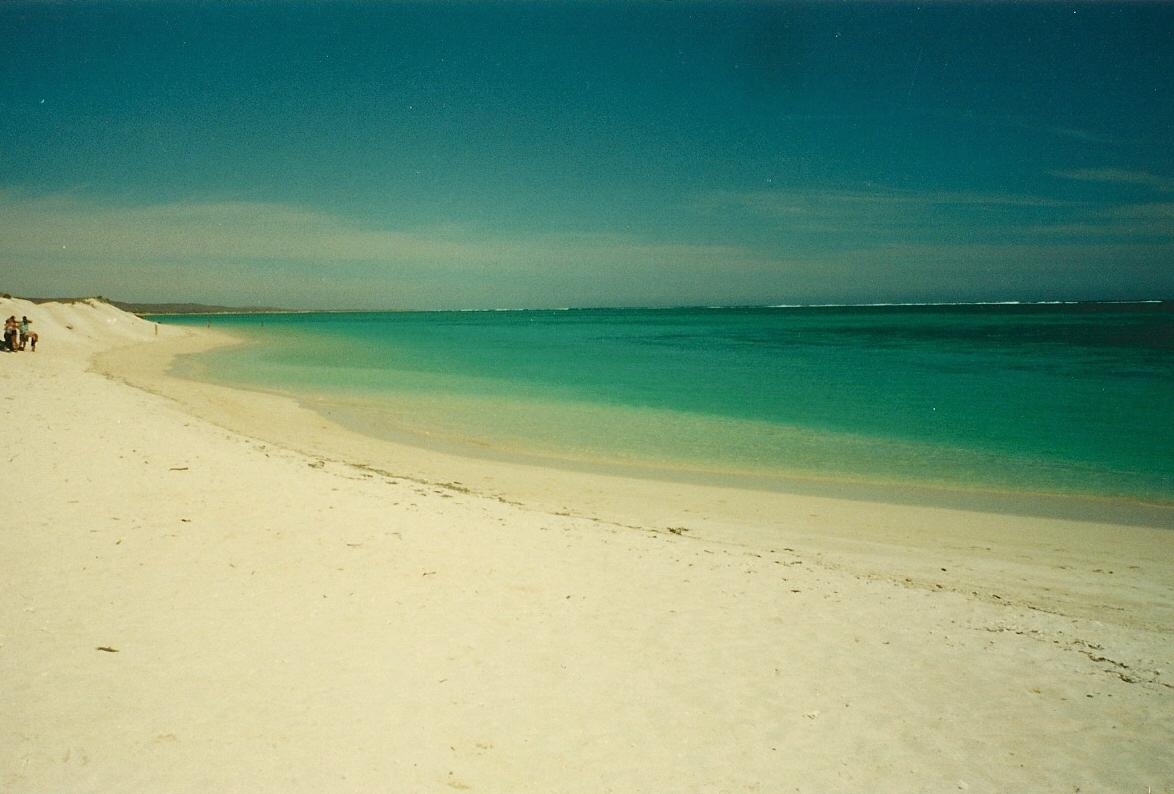
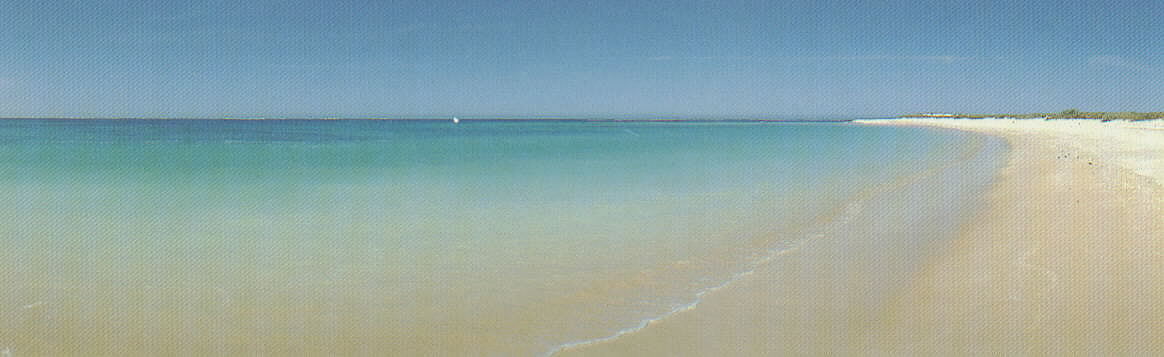
Cape Range covers 47,000 hectares, has over 700 caves, barely a tree in sight, and is dotted with deserted bays of white sand and crystal‑clear water. Turquoise Bay — appropriately named — was my launch point.
I pulled into the dusty, empty car park in the early‑morning heat. As I opened the door, I heard a rustle from the long grass and saw something large shoot past the back of the car. My heart skipped a beat. I peered through the windows. Nothing. I crept around the back, sweat already pouring down my face as the sun blasted me with an overdose of vitamin D.
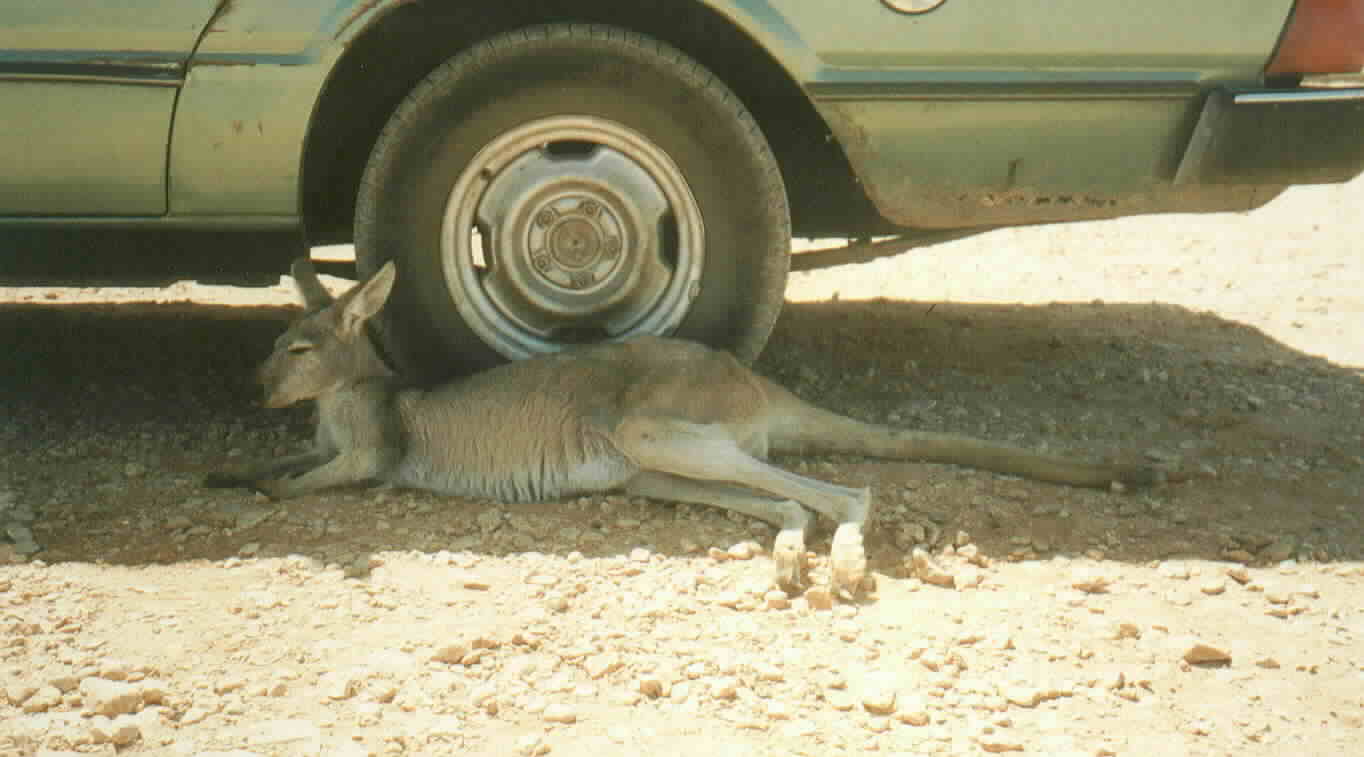
Then I saw him: a giant kangaroo, casually lying in the shade of my car.
It seemed he’d been waiting for someone — anyone — to arrive and create some shade. As soon as I parked, he’d darted underneath. He barely acknowledged me as I slowly sat beside him. I reached into my daypack, pulled out a cheese sandwich, and offered it to him. He inhaled it in one bite. I swear he gave me a little smile of thanks before settling in again, clearly with no intention of moving. Not a problem, given I had a date with the reef.
After a short walk to the deserted beach, I laid out my sarong and felt the powdery sand squeak under my feet as tiny waves lapped at the shore. Already sweating buckets, I grabbed my snorkel and headed into the water.
A few minutes in, the sandy bottom darkened as the reef began. Fish darted around me. I needed to get my head under properly, so I slipped on my mask and snorkel and dipped below the surface.
And there it was.
A fish the size of me, just a few metres away, staring straight at me.
I knew it wasn’t a shark, but I absolutely pooed myself. Not literally — but close. I just wasn’t expecting a creature that big to be hovering there like it had been waiting for a staring contest. It didn’t move. It didn’t blink. (Do fish even blink? In that moment, it felt like it should have.)
I shot back up, swam to shore as fast as my legs would go, apologised to Skippy for stealing his shade, and drove back to the accommodation to read my book and recover my dignity.
That evening, in a small bar in Exmouth, I told the locals my story. They started giggling.
“Probably a tuna,” one said in a strong outback Aussie accent.
I frowned. “But tuna are tiny. They come in tins.”
“No, you bloody idiot,” he laughed. “Tuna can be up to 500 kilos.”
His mates nearly fell off their stools laughing. For the second time that day, I made a sheepish exit.
For what it’s worth, I did go back to the reef several times after that and never again saw a fish the size of me — but I did see countless colourful fish, sharks, and rays.
Despite the momentary terror (and the need to change my swim shorts), it was worth it to experience such a raw, untouched part of the world.
And ever since that day, I’ve never looked at a can of tuna the same way.