
The Train from Ulaanbaatar to Beijing
Within thirty minutes of leaving Ulaanbaatar station, the scenery dissolved into pure nothingness. Not “quiet countryside” nothingness — I mean nothing. No people, no gers, no animals, not even a tree. Just endless steppe stretching to the horizon.
I spent hours with my head out the open window, wind and sun on my face, happily lost in my own thoughts.
Five hours at the border later, we were finally in China, and twenty‑nine hours after leaving UB, we rolled into Beijing feeling slightly feral.
And then we stepped outside the station.
From the peaceful emptiness of Mongolia to a city of twenty million… it felt like walking straight into an ant’s nest. A sea of people swept us along whether we wanted to move or not.

Beijing’s Hutongs: The Calm in the Chaos
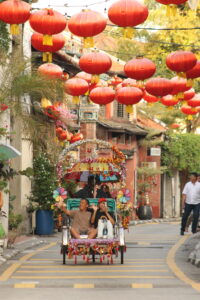
Surprisingly, not all of Beijing is like this. Our hostel was tucked inside one of the city’s many hutongs — narrow alleyways built centuries ago after Chinggis Khan razed Old Beijing to the ground.
Each home is single‑storey with a courtyard, and the streets feel like a village. People live their lives outside: men drinking beer and playing cards, women cooking or hanging washing, kids running around, dogs asleep in the shade. Wandering the hutongs quickly became one of our favourite Beijing activities.
Sadly, many hutongs are being bulldozed as the city modernises.
Sightseeing With Goldfish Attention Spans
Both Anya and I have the attention span of a senile goldfish, so sightseeing is usually a rapid‑fire affair.
Apparently, Tiananmen Square is the World’s largest public square, but we zipped through it, and the nearby Forbidden City — a 15th‑century maze of palaces and temples hidden behind an 8‑metre wall and a 50‑metre moat. You get the best view from Jingshan Park, which we admired… briefly.
The Temple of Heaven was a highlight. The park is full of locals playing cards, singing, practising tai chi, taking music lessons, and — unexpectedly — advertising their children for dating.
We saw a crowd of older people standing around pieces of paper with writing and photos. We thought it was a missing‑persons board until someone explained it was a matchmaking market.
Parents casually comparing their children’s height, job prospects, and marriage potential.
One woman even asked if I was free.
I’ve never seen Anya flash her wedding ring so fast.

Communication: 10% Words, 90% Charades
Apart from “hello, you wanna buy a watch?”, hardly anyone spoke English. Sign language became our new master language.
Ordering food was a comedy show.
In one restaurant, the waitress came over the second we sat down.
We tried to ask for five minutes, but she didn’t understand the words, the hand signal of five fingers held up, or the concept.
She pointed at the menu, the drinks fridge, our chopsticks — panicking as if we were failing a test.
Other diners watched our game of charades unfold.
Eventually she left… and didn’t return for fifteen minutes. Not sure she ever understood.
At Donghuamen night market, vendors did speak English — mostly words like “snake”, “starfish”, “spider”, “centipede”. We stuck to a splendid Peking duck.


The Great Wall: Worth Every Step
The Great Wall was a must visit.
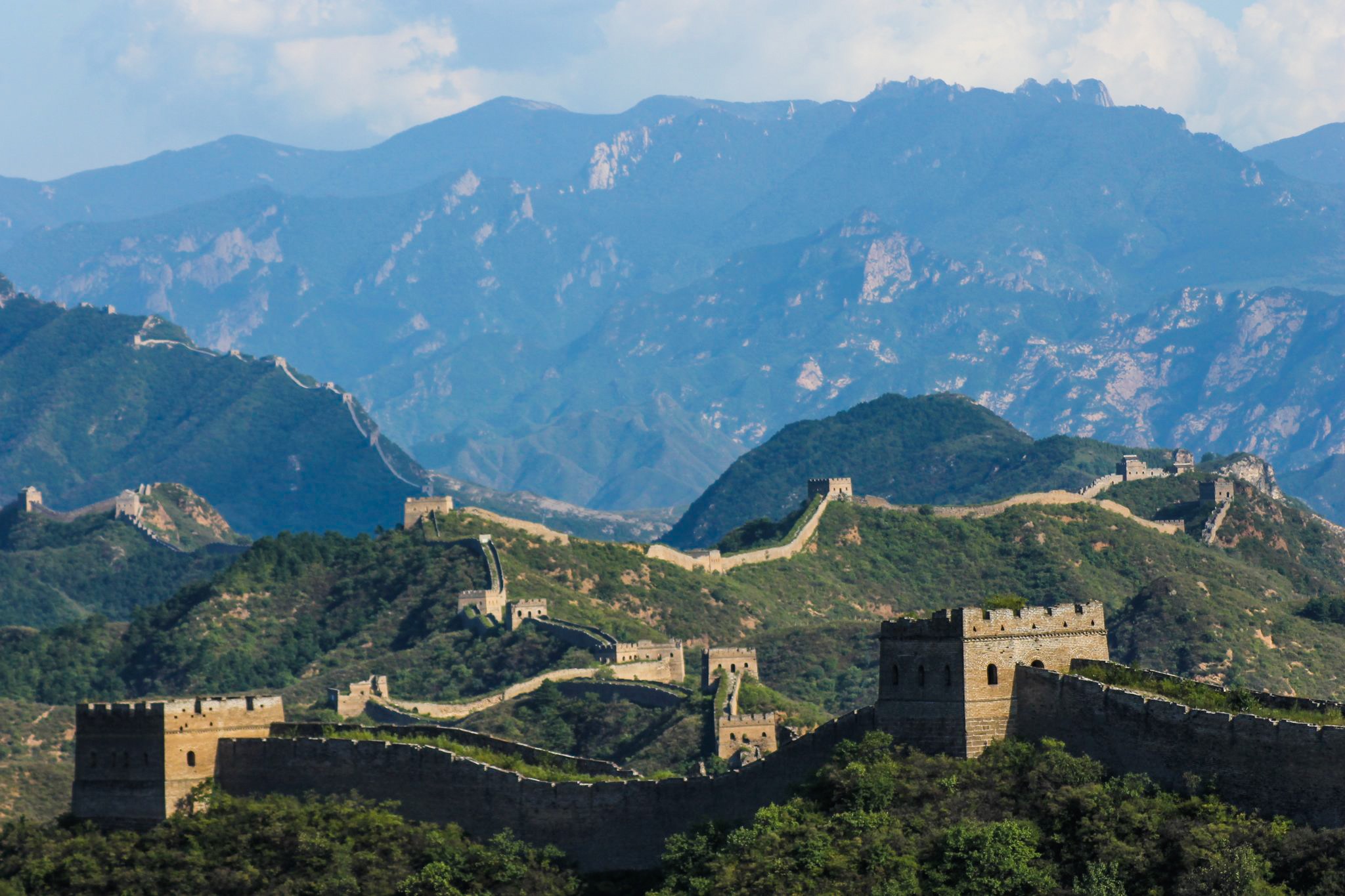
Built in sections from the 3rd century BC onwards, it snakes thousands of kilometres across northern China.
It didn’t work — Chinggis Khan’s armies smashed through it, and centuries later Europeans simply arrived by boat — but it’s still spectacular.
We wanted to fine a remote section, so we headed to Gubeikou to stay at the Great Wall Box House, a fantastic hostel in a tiny ancient village right beside a “wild” part of the wall.
Getting there took two buses, four hours, painful sign language, and fending off lying taxi drivers, but it was worth it.
We hiked for five hours in searing heat and were rewarded with sweeping mountain views and the wall stretching endlessly across the horizon. A proper travel moment.

The Train to Xi’an: making me feel tall
Boarding a train at Beijing West is like boarding a plane: ticket check, security check, queues everywhere, and a final low‑cost‑airline‑style scrum to reach your platform.
We travelled second‑class “hard sleeper”, which is pleasant enough — unless someone in your six‑berth section farts. The top bunk (where we were) becomes a gas chamber. The smell rises, gets trapped, and lingers for hours.
Also, Chinese sleeper beds are built for Chinese bodies. My feet dangled a foot off the end into the aisle, and every time someone walked past, they crashed into them. Sleep was limited.
After fifteen hours, we arrived in Xi’an — the ancient end of the Silk Road — ready for four days of exploring before heading to Shanghai.
Here’s to more sign language.