
What is Britishness? – Small town England
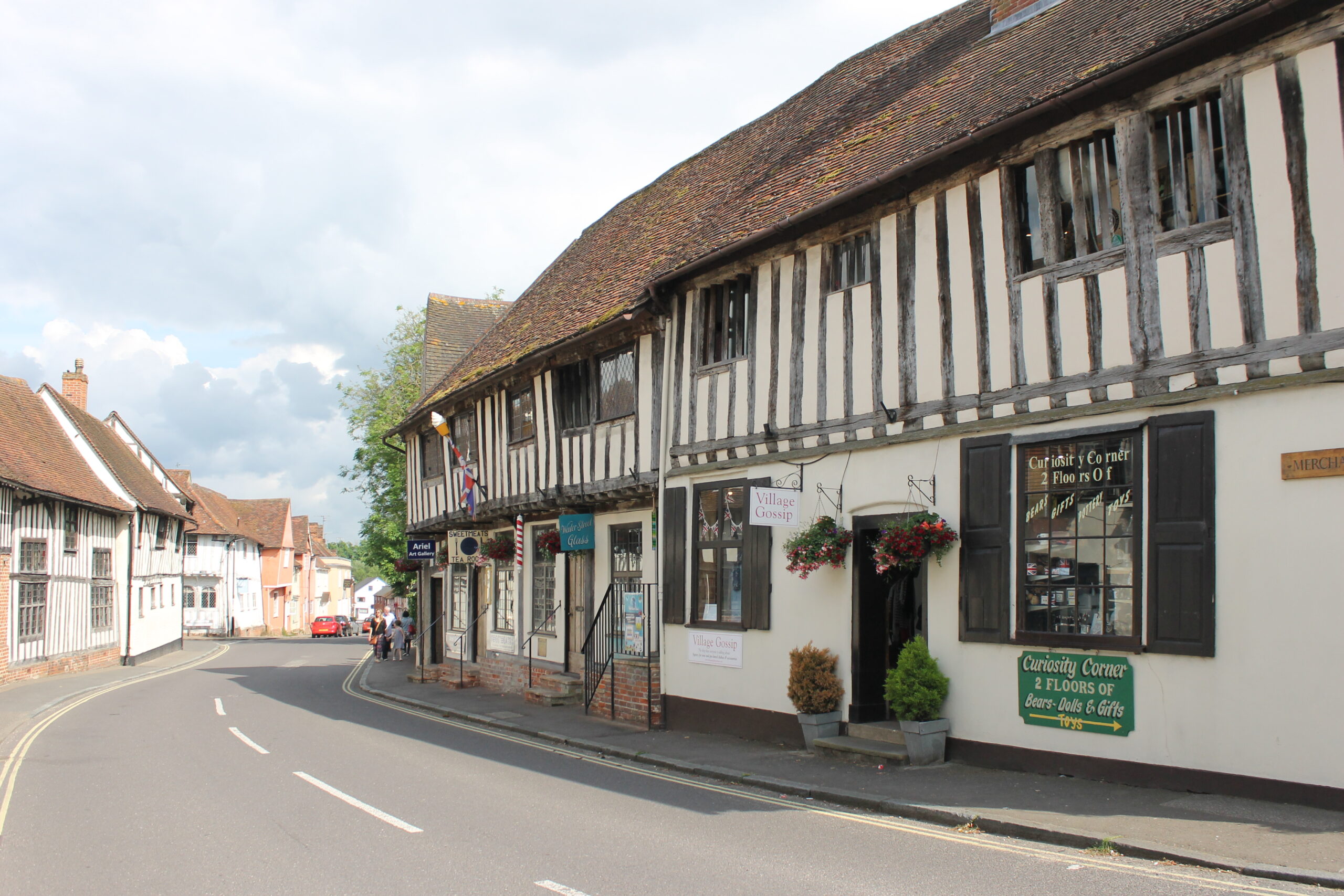
Before we migrate to New Zealand, we got to spent some time in small town Suffolk.
There’s a true community spirit in this part of the UK, best demonstrated by the numerous quintessential British events happening here.
This weekend, for instance, we had the town carnival and fete.
In a few weeks, there will be “Suffolk Dog Day”; a few weeks back, there was the “Bark in the Park” dog show featuring competitions like “Waggiest Tail.”
Last Saturday was the Horticultural Society’s annual competition, last night was the “Aldeburgh Soul by the Sea” evening, and every month there’s Scrabble night at the library.
The small-town England Carnival
So, about that carnival. Rio Carnival, this is not.
It’s a parade of several trucks driving through the town with locals dressed up in various paper-mâché costumes. Following the carnival is the fete—that classic British summer tradition that takes place in almost every town and village, serving as the highlight of the season.
At the fete, we found stalls like “Guess the Name of the Pig,” a tombola, face painting, and the showpiece of the day: the egg-and-spoon race.
The Egg and Spoon Race
Speaking of which, the egg-and-spoon race.
It’s no wonder Britain hasn’t had an Olympic champion sprinter for over two decades. While the Jamaicans are grooming their eight-year-olds for world sprint domination, the Brits train theirs by running 30 meters carrying a boiled egg on a spoon.
But wait, it’s not as simple as that. There are rules. Oh yes, the spoon must be held far out in front, and no cheating by using the thumb to hold the egg still. The non-spoon hand must be kept behind the back.
The atmosphere is tense as contestants aged four to fifteen line up on the start line.
This is the most prestigious prize of the year, and a year of fame awaits the winner.
Their face will appear in the local newspaper, and their name will become the constant topic of gossip in local cafés as they descend into a life of fame with alcohol and drugs.
As the starter gets the race underway, the contestants set off. Some move at a steady walking pace; others adopt what can only be described as the “bursting-for-the-bathroom” walk—a hybrid of walking and running. Then there are the four-year-olds, who haven’t really got a clue as to why they are being asked to run with an egg on a spoon.
After just a few seconds, two of the older girls cross the white ribbon in what looks like a dead heat, both eggs still intact. After conferring with a colleague, the adjudicator declares a girl named Claire the winner. She is now the town’s celebrity. If only the egg-and-spoon race were an Olympic event; Claire might be Britain’s only hope of gold.
The Sweat Pea Competition
Next up: the Horticultural competition.
There are over a hundred categories for entrants to submit their plants, flowers, fruits, or vegetables. Categories like “Four Potatoes on a Plate,” “Best Cucumber,” or “Most Ripe Apple” had numerous entrants. But the one that caught our eye was the “Odd-Shaped Vegetable.”
My mum entered this with a carrot that looked like it had a face, two legs, and some genitals. Sadly, it was up against limp competition: an erotically shaped potato and nothing else. There’s obviously a lack of odd-shaped veggies in this region. After much deliberation, the judge announced that the carrot was the winner. My mum won first prize—or, you could say, she came second-last.
First prize doesn’t mean a medal or even a cash prize. No, better than that. The entrant gets to hold their head high and feel proud when walking the streets, knowing they have won first prize in the odd-shaped vegetable competition. What more does one need?
Anya and I, however, did learn something from this event.
The talk of the town for days leading up to the competition was the “Sweet Pea” competition.
With by far the highest number of entrants—and one contestant taking two hours to set up his showpiece—it was the big prize of the day. Anya and I were totally confused about how this could be taken so seriously and why people were submitting entries from afar within the county.
Fair to say, we sniggered about the whole affair and were desperate to see all these entries lined up on display. However, the final laugh was on us.
We turned up at the event hall and realized that a “sweet pea” is, in fact, a flower, not a sweet, flavored green vegetable pea as we had imagined. We had images of dozens of single peas being lined up and judged, but instead, we were confronted by some beautiful flower arrangements. The seriousness of it made a bit more sense now.
But two hours of prep? Really!?
So, there you have it. Only in rural Britain would all these wonderful things happen. It’s a real cuteness about British culture, and something I may find I miss when I’m away. But if there’s a boiled egg and a spoon, I can easily create a piece of home in New Zealand!
Read more of our travel adventures here.
Read more UK Blogs here.
You Might Also Like
Read more of our UK Content here
Read more of our travel blogs from around the world here

Read our travel guides from various countries here