A brief history of Mongolia
I was gutted that visa issues forced us to abandon our dream of travelling overland into Mongolia via the old Silk Road. Instead, we had to fly. The one upside? Seeing the country from the air.
From Kyrgyzstan we flew over a huge stretch of Mongolia, and the views were spectacular. First came the Tian Shan mountains in northwest China, then the endless red dunes of the Gobi Desert — wind‑carved patterns stretching as far as the eye could see.
As we approached Ulaanbaatar (UB), the land turned greener and hillier, but still no towns, no cities, nothing. Just the occasional dirt track and, finally, clusters of gers (yurts) scattered across the landscape.
Mongolia’s history is diverse. Over the centuries it’s been ruled by Chinese, Turks, Uighurs, Kitans — and then came the big one: Chinggis Khan.
Born Temujin in the late 12th century, he lost his father at age 10, was exiled, built alliances, raised an army, and eventually conquered Central Asia, northern China, the Middle East, and parts of Russia.
After his death in 1227, the empire kept expanding, becoming the largest in human history — from the Sea of Japan to modern‑day Poland, covering 700 cities.
A 2003 study even suggests that 1 in every 200 men in the region is descended from him — around 16 million people. Clearly, he enjoyed conquering… in more ways than one.
After the empire collapsed, Mongolia bounced between Chinese and Russian influence before finally standing independently in 1987.
The Reality of Travelling Mongolia
When we added Mongolia to our itinerary, we had no idea how vast it was — or how hard it is to get around. Once you leave UB, roads basically stop existing. It’s dirt tracks, no signs, no directions, and a whole lot of guesswork.
If you have unlimited time, camping gear, Bear Grylls‑level survival skills, Mongolian language ability, and the mechanical knowledge to keep an old Russian “wazik” van alive on the worst roads on earth… you might manage a self‑drive trip. Most travellers sensibly join a tour.
I’m not a tour person — I prefer doing my own thing — but we had no camping gear, no time, no language skills, and my car knowledge begins and ends with “press accelerator, go faster.” So, a tour it was.
Tours aren’t cheap either. After surviving on $50 a day, the $100–500 per day price tag (for two people) was a shock. After a lot of research, we booked through our hostel (Sunpath), which was the cheapest and came recommended by a mate.
So off we went: six of us from the hostel, one driver, one guide, and one indestructible wazik heading into central Mongolia.
Our guide, Yanja, was lovely but… vague. “What are we doing tomorrow?” I asked, “We go somewhere.” Was her reply. “When was this monument built?” I asked, “Maybe 1650. Or 1750. Something like that.” was her reply.
Camels, Monasteries & Questionable Statues
The first few days were brilliant. We rode horses through the peaceful Orkhon Valley, visited a 17th‑century monastery in Kharkhorin, and even saw a giant 13th‑century stone penis said to bring fertility to those who sit or stroke it. (Anya stroked it like it was her new puppy)
Then came the camels.
I’d ridden a camel before, so I wasn’t worried — until I saw mine grinning at me. Within seconds his stomach rumbled, and he unleashed the biggest diarrhoea explosion I’ve ever seen (or heard). Clearly, he’d had the vindaloo the night before.
Then he flicked his tail and covered me in it.
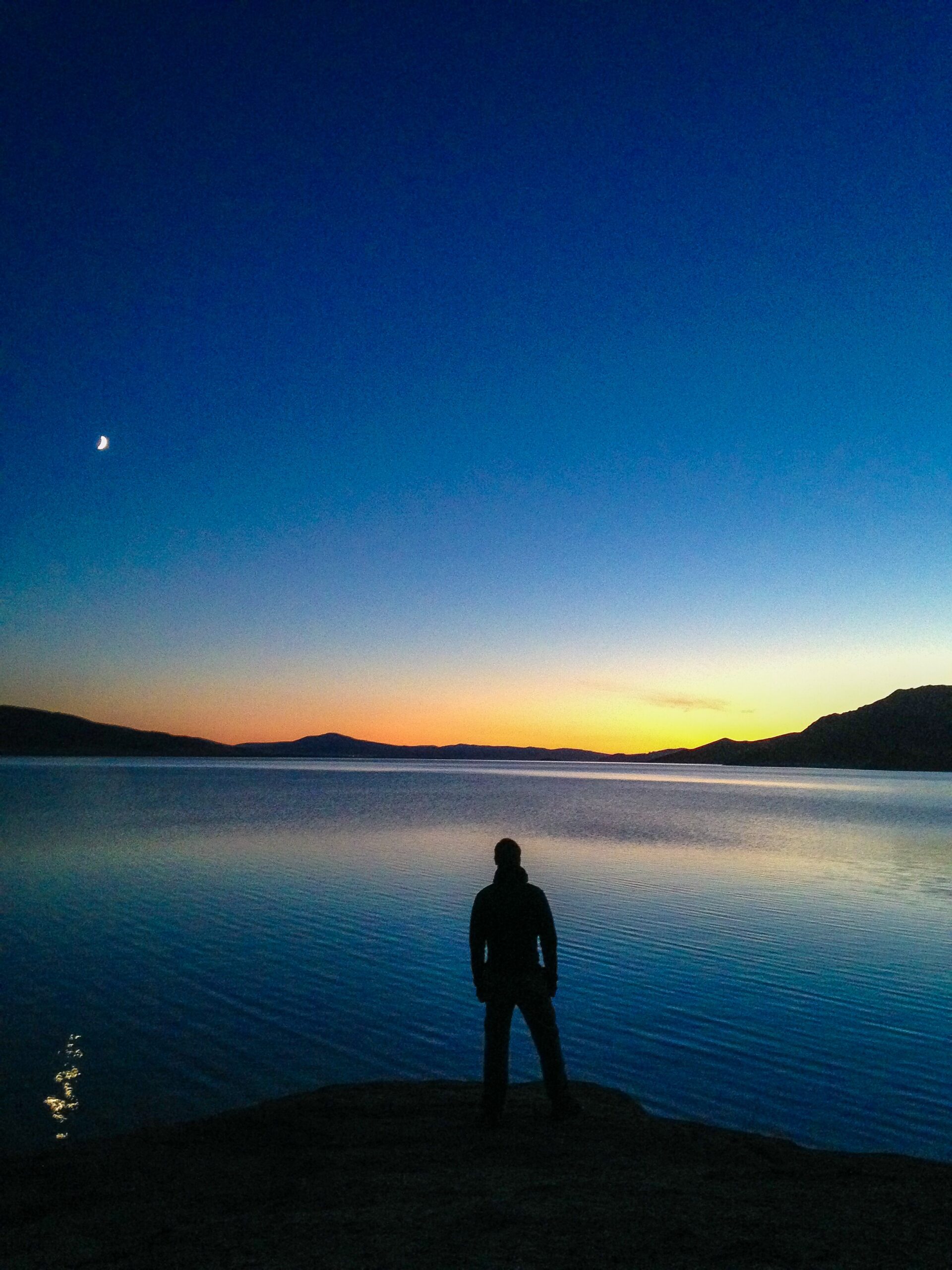
Still, the ride was peaceful as the sun set over the hills… even if I ended it with a sore backside and a new appreciation for Silk Road explorers who did this for months.
And Then My Body Gave Up
Squat toilets require technique — something my dodgy back isn’t built for. One morning, mid‑business, my back went. Completely. I was stuck in a painful half‑squat, desperately trying not to fall into the hole.
After several tense manoeuvres, I managed to stand and shuffle back to our ger. But the damage was done. My back was in agony. Add in diarrhoea, heartburn, and the fact I hadn’t washed in four days… I was falling apart.
Even a massage from our host couldn’t save me.
Three days of torture followed as our wazik bounced over mud tracks and open fields. Eventually we reached a hot spring with, surprisingly, an actual spa house. For £5 I got a massage that finally stopped the spasms — and we even managed a shower. Bliss.
The Rest of the Journey
The remaining days were filled with hot springs (Tsenkher), extinct volcanoes (Khorgo), and beautiful lakes (White Lake). Each night we stayed with nomadic families in a ger or tourist ger camps.
Entering a ger, you’re welcomed by the host family with warm salted horse milk or alcoholic milk (yes, alcoholic milk). Both are… memorable.
Mongolian nomadic cuisine won’t be troubling Jamie Oliver anytime soon. Dinner was always “mutton and something” — mutton with noodles, mutton with rice, mutton with bread. If you were lucky, you got a slice of carrot.
Most of the trip was long drives through vast nothingness: green plains, blue skies, gers dotted across the horizon, horses everywhere. Our driver frequently stopped at random gers to ask for directions, often completely lost.
One 100km stretch took five hours — the same pace as a marathon runner. Mo Farah could’ve piggy‑backed me there faster.
Outside UB, this is all you see. It can feel empty but also refreshing — a land untouched by modern life. No buildings, no roads, no electricity (just solar panels), no phones, no bathrooms. Just horses, yaks, goats, sheep… and mutton.
It’s not a luxury holiday. It’s not even really a sightseeing destination. It’s a place you experience.
Back to UB
We’re now back in Ulaanbaatar, sorting ourselves out before the long train ride to Beijing. UB feels like a different planet compared to the nomadic world we’ve just come from — cafés, bars, and Chinggis Khan statues everywhere.
Mongolia broke my back, covered me in camel poo, and fed me more mutton than any human needs… but it was unforgettable.